

Practice Areas
Turkish Citizenship by Investment Lawyer in Istanbul: Routes, Process and Legal Checks
Turkish citizenship by investment lets a foreigner apply for citizenship, with their spouse and children, after investing at least USD 400,000 in real estate or USD 500,000 in another qualifying asset, or employing 50 people. Most investments are held three years. As of November 2026, the route's authority certifies the investment and the President decides.
- Legal basis: Turkish Citizenship Law No. 5901, art. 12(1)(b), and article 20 of its implementing regulation.
- Minimum amounts: USD 400,000 for real estate; USD 500,000 for fixed capital, a deposit, bonds, fund units or a private pension; or jobs for 50 people.
- Holding period: three years on most routes; no fixed period on the employment route.
- Certificate: a certificate of conformity (uygunluk belgesi) from the route's authority; for property it is processed by the land registry (Tapu ve Kadastro Genel Müdürlüğü, TKGM).
- Residence permit first: a short-term residence permit under Law No. 6458, art. 31(1)(j), comes before the citizenship application.
- Family: the foreign spouse and the minor or dependent children apply on the same investment. Parents do not.
- No language or residence test: the legal test is the absence of a national security or public order obstacle, and the decision is discretionary.
- Typical duration: often several months from filing to decision, with no legal deadline.
Who Turkish Citizenship by Investment Suits, and Who It Does Not
Turkish citizenship by investment (CBI) suits investors who can commit a large sum in Turkey for three years and document where it came from. People often call it the Turkish passport by investment, though the passport only follows the citizenship decision. It fits:
- investors who will not need the capital for three years and accept the asset's risk: lira exposure for deposits and bonds, market risk for property and funds;
- families who want the spouse and minor children in one file;
- people whose home country allows dual nationality;
- investors with a documented trail for the funds.
It is a poor fit for:
- anyone who needs the money back within three years;
- people who only want to live in Turkey, for whom a residence permit may be enough (the property-based permit has needed a property worth USD 200,000 since 16 October 2023): see residence permit vs Turkish citizenship;
- families who expect parents or independent adult children to be included;
- anyone who cannot explain the source of funds, or who has a sanctions, criminal or security issue;
- anyone expecting a promised result or a fixed date.
The Seven Turkish Citizenship by Investment Routes Compared
Article 20(2) of the regulation sets seven routes, each with its own minimum and its own certifying authority. The table shows the position as of November 2026; thresholds are set by Presidential decision and can change.
| Route (art. 20(2)) | Minimum | Holding period or condition | Certificate issued by | Can you use the money? | Family members |
|---|---|---|---|---|---|
| Real estate (b) | USD 400,000 or equivalent in foreign currency | 3-year no-sale annotation on the title deed | Ministry of Environment, Urbanisation and Climate Change; processed in practice by TKGM | Yes: you can live in or let it, but not sell it for 3 years | Spouse, minor or dependent children |
| Bank deposit (ç) | USD 500,000 or equivalent in foreign currency | Converted to lira through the Central Bank; held as a lira deposit for 3 years | BDDK | No: blocked for 3 years; interest depends on the bank | Spouse, minor or dependent children |
| Government debt instruments (d) | USD 500,000 or equivalent in foreign currency | Converted to lira; lira government debt instruments held for 3 years | Ministry of Treasury and Finance | No: the account is blocked for 3 years | Spouse, minor or dependent children |
| Real estate or venture capital fund units (e) | USD 500,000 or equivalent in foreign currency | Units held for at least 3 years, blocked at the Central Registry Agency (MKK) | SPK | No: the units are blocked; their value moves with the fund | Spouse, minor or dependent children |
| Private pension, BES (f) | USD 500,000 or equivalent in foreign currency | Stay in the system for 3 years, in funds SEDDK allows | SEDDK | No: no plan change or transfer for 3 years | Spouse, minor or dependent children |
| Fixed capital investment (a) | USD 500,000 or equivalent in foreign currency | No period in article 20; the Ministry procedure reportedly locks the shares for 3 years from the certificate of conformity | Ministry of Industry and Technology | The capital is used in the business itself | Spouse, minor or dependent children |
| Employment (c) | At least 50 employees who are Turkish citizens | The Ministry takes into account continuity over the last 6 months | Ministry of Labour and Social Security | Not an amount; the jobs must be real and continuous | Spouse, minor or dependent children |
Under article 20(10) of the regulation, on the real estate, deposit, bond, fund and pension routes the foreign currency must be sold, before the transaction, to a bank in Turkey and by that bank to the Central Bank of the Republic of Turkey (CBRT). The bank issues a foreign exchange purchase certificate (döviz alım belgesi, DAB), and lira-sourced investment has not been accepted on these routes since 6 January 2022. The rule does not cover the fixed capital and employment routes. Each route has its own minimum and, as a rule, amounts invested under different routes are not added together, so plan to meet one route's minimum in full.
The Legal Basis: From Law No. 5901 to the Investor Residence Permit
Turkish citizenship by investment is an exceptional acquisition of citizenship under article 12 of the Turkish Citizenship Law No. 5901. Provided there is no obstacle on national security or public order grounds, the foreigners it lists may acquire citizenship on the proposal of the Ministry of Interior and by Presidential decision. The word "may" matters. Meeting the investment conditions gives no right to citizenship. The General Directorate of Civil Registration and Citizenship (Nüfus ve Vatandaşlık İşleri Genel Müdürlüğü, NVI) publishes an English translation of Law 5901.
The legal chain has three links:
- Law 5901, art. 12(1)(b). Added by the International Labour Force Law No. 6735 (Official Gazette of 13 August 2016, No. 29800), it covers foreigners holding a residence permit under article 31(1)(j) of Law No. 6458, Turquoise Card holders, and their foreign spouse and their own or their spouse's minor or dependent foreign child.
- Law 6458, art. 31(1)(j). The Law on Foreigners and International Protection No. 6458 provides a short-term residence permit for foreigners who, without working in Turkey, make an investment of the scope and amount set by the President, and for their foreign spouse and minor or dependent children. Law 6458 allows a permit on this ground for up to five years at a time, and the migration office sets the period actually granted.
- The regulation, art. 20. The Regulation on the Implementation of the Turkish Citizenship Law (Official Gazette of 6 April 2010, No. 27544) sets the routes, amounts and certifying authorities in article 20(2). Article 20(10) contains the Central Bank conversion rule, and the last paragraph of article 20 lets the foreign spouse and the minor or dependent children apply together with the investor.
This is why every investor needs the investor residence permit, often called the "j-type" permit, before the citizenship application. It is also why there is no language test, no minimum residence and no "good morals" assessment of the kind used in ordinary naturalisation. According to the Interior Minister's statement reported on 29 May 2026, 174,567 people had acquired citizenship through investment since 2018, of whom 51,762 were investors and 122,805 family members.
Each Investment Route in Brief
Each route has its own page; these are the deciding points.
Real estate: USD 400,000
The real estate route needs property worth at least USD 400,000, acquired on or after 13 June 2022, with a three-year no-sale commitment on the title deed (tapu, the land register record). Since 12 December 2023 only property with condominium ownership (kat mülkiyeti) or a construction servitude (kat irtifakı), or land with a building on it, qualifies. The price is paid in foreign currency converted through a bank, with the DAB issued before the deed; a valuation by an SPK-authorised firm must support the amount; and strict seller rules apply, as the land registry's questions and answers explain. See Turkish citizenship by real estate investment.
Bank deposit: USD 500,000
The deposit route needs at least USD 500,000 or the equivalent in foreign currency, converted through the Central Bank and held as a Turkish lira deposit for three years in the applicant's sole name. The bank obtains the certificate from the Banking Regulation and Supervision Agency (Bankacılık Düzenleme ve Denetleme Kurumu, BDDK). The investor carries the lira risk, because the FX-protected deposit scheme closed to new accounts and renewals on 23 August 2025. See Turkish citizenship by bank deposit.
Government debt instruments: USD 500,000
The bonds route needs at least USD 500,000 or the equivalent in foreign currency, converted and invested in Turkish lira government debt instruments held for three years in a blocked account; instruments with less than three years to maturity are not used. The Ministry of Treasury and Finance (Hazine ve Maliye Bakanlığı) issues the certificate and updated its procedures for exceptional citizenship in June 2026. See Turkish citizenship by government bonds.
Real estate and venture capital fund units: USD 500,000
The fund route needs at least USD 500,000 or the equivalent in foreign currency in units of a real estate investment fund (GYF) or a venture capital investment fund (GSYF), held for at least three years and blocked at the Central Registry Agency (Merkezi Kayıt Kuruluşu, MKK). These funds accept only qualified investors, and since SPK's decision of 26 October 2026 the USD 500,000 alone may not make an investor qualify. The Capital Markets Board (Sermaye Piyasası Kurulu, SPK) issues the certificate, as its citizenship page explains. Fund values can fall as well as rise. See Turkish citizenship by investment fund shares.
Private pension (BES): USD 500,000
The pension route, added on 13 May 2022, needs at least USD 500,000 or the equivalent in foreign currency in a new private pension (bireysel emeklilik sistemi, BES) contract, kept for three years in funds allowed by the Insurance and Private Pension Regulation and Supervision Agency (Sigortacılık ve Özel Emeklilik Düzenleme ve Denetleme Kurumu, SEDDK). There is no state contribution, and the transaction cannot be cancelled once the currency is sold. See SEDDK's explanatory note and Turkish citizenship by pension fund.
Fixed capital investment and employment
The fixed capital route needs at least USD 500,000 or the equivalent in foreign currency (the lira equivalent has not been accepted since January 2022), invested in land, buildings, machinery or equipment used to produce goods or services, certified by the Ministry of Industry and Technology on a sworn financial advisor's (YMM) report. Buying only real property or vehicles does not qualify. The employment route needs companies that together employ at least 50 Turkish citizens, the Ministry of Labour and Social Security taking into account the continuity of their employment over the last six months, as its guidance page describes. See Turkish citizenship by capital investment and employment.
What Changed from 2022 to 2026, and What It Means for an Investor Today
The thresholds have not moved since 2022, but the conditions have tightened almost every year. These changes still shape a file in November 2026:
- 6 January 2022, Presidential Decision No. 5072: foreign currency for the property, deposit, bond and fund routes is sold to the Central Bank before the transaction, deposits and bonds are held in lira for three years, and lira-sourced investment is no longer accepted.
- 13 May 2022, Decision No. 5554: the property minimum rose from USD 250,000 to USD 400,000 for acquisitions from 13 June 2022, and the pension route was added. The acquisition date still decides which threshold applies to an older purchase.
- 2023, TKGM guide (updated in 2024): no shared (hisseli) ownership, one use of a property for citizenship, a single promise-to-sell contract for an off-plan amount, and seller rules that exclude property registered to a foreign individual or transferred by a foreigner or an investor-citizen to a Turkish citizen or company in the last three years, property of the buyer's Turkish first-degree relatives or related companies, and sales by foreign-capital companies.
- 2023 and 2024, in practice: in-person biometrics for the investor and the spouse, a residence permit in the spouse's own name and criminal record certificates for both. Reported start dates vary.
- 12 December 2023, Decision No. 7938: the property-type restriction described above.
- 2024: valuations from a single company, GEDAŞ, from 4 March 2024, and the electronic amount determination document (tutar tespit belgesi, TTB) from 9 December 2024.
- 23 August 2025: the FX-protected deposit scheme (KKM), in place since December 2021, closed to new accounts and renewals.
- June 2026: updated Treasury procedures for the bonds route.
- 1 July 2026: SEDDK's BES Circular 2026/1, which replaced the 2016 circular, came into force, with a section on pension contracts for citizenship.
- 4 August 2026: the Ministry of Interior announced 6,134 annulments and withdrawals of citizenship (next section).
- 28 September 2026 (announced by TKGM on 29 September): the single-valuer rule ended. Any SPK-authorised firm with active membership of the valuers' association (TDUB) and connected to the valuation information system (TADEBİS) may report, and the report and TTB can be used for 12 months instead of 6.
- 1 December 2026, scheduled: the Ministry of Trade's Secure Payment System (Güvenli Ödeme Sistemi) is due to become mandatory for title deed sales, unless the start date, already postponed, moves again. How it will fit with the DAB step for citizenship purchases has not been published.
No threshold increase has been enacted as of November 2026. Figures reported in the press or on agency sites are not law: a change would need a Presidential decision published in the Official Gazette.
The 2026 Revocations: Why Independent Legal Checks Matter
On 4 August 2026, the Ministry of Interior announced that the citizenship decisions of 6,134 people, 1,413 principal investors and their family members, had been annulled or withdrawn under articles 31 and 40 of Law 5901. According to the figures reported in the press:
- 5,391 people (1,150 investors, whose certificates of conformity were cancelled) lost citizenship over sham or irregular transactions, mainly inflated valuation reports on cheaper properties;
- 743 people (263 investors and their family members) had their citizenship withdrawn on public order and national security grounds;
- criminal investigations, including an operation in 16 provinces, targeted those behind false valuation reports.
Article 31 of Law 5901 allows a decision obtained by false declaration or by concealing material facts to be annulled, and article 40 allows a decision taken without the legal conditions being met to be withdrawn. As the 2026 figures show, family members who acquired citizenship through the investor can lose it too. A valuation arranged to lift a cheaper flat to USD 400,000 is therefore not a shortcut. It is what the authorities now look for. Under the TKGM guide, the price declared in the deed, the valuation (TTB) figure and the payments made in converted currency (shown on the DABs) must each reach USD 400,000, so a higher valuation does not cure a lower deed price.
Independent legal checks catch these problems before money moves: a lawyer who is not paid by the seller or the developer tests the price, the valuer's authorisation, the ownership history and the payment trail. See Turkish citizenship due diligence and real estate due diligence in Turkey.
The Turkish Citizenship by Investment Process, Step by Step
The process follows the same order on every route; only the investment step changes.
- Initial legal review: the route, the investment's eligibility, the family, dual nationality and the source of funds. The lawyer flags obstacles before any payment.
- Power of attorney: a special power naming the acts (title deed, residence, citizenship, bank and tax steps), given before a Turkish notary with a sworn translator, at a Turkish consulate, or before a foreign notary with an apostille and a sworn translation. General foreign powers are often refused. The lawyer drafts the wording.
- Tax number and bank account: a potential tax number from a tax office and an account with a bank in Turkey, which runs its own identity, anti-money laundering and source-of-funds checks. The lawyer obtains the tax number and prepares the bank file.
- The investment: made with the currency converted and the DAB issued where required. For property: the valuation and TTB, the DAB before the deed, payment to the seller's account and the three-year annotation. The lawyer runs the due diligence, checks the contract and the payment sequence and attends the land registry.
- Certificate of conformity: the authority confirms the investment and sends the certificate to the Presidency of Migration Management (Göç İdaresi Başkanlığı) and NVI. It can be requested in person or by proxy. The lawyer requests it or follows it up.
- Investor residence permit, art. 31(1)(j): filed with the Provincial Directorate of Migration Management. In current practice the investor and the spouse attend biometrics in person and the spouse receives a permit in their own name; minor or dependent children are covered on the same ground. The lawyer prepares the file and attends with the family.
- Citizenship application: under the NVI procedures for foreign investors, joint offices staffed by the Presidency of Migration Management and NVI take the residence and citizenship applications together, with a common document set. Under NVI's general rules the VAT-4 form is filed with the governorship (provincial civil registry) where the applicant lives, or with a Turkish consulate abroad, in person or by special power of attorney; postal applications are not accepted. Check with the office before planning a filing abroad. The lawyer files it and answers requests for documents.
- Security review and decision: the Ministry of Interior runs an archive and security investigation and proposes the file to the President, who decides. The result is notified through the civil registry. The lawyer tracks the file and advises on any challenge.
- Registration, identity card and passport: issued by NVI or, abroad, through a consulate. The lawyer handles the appointments.
With the power of attorney, a Turkish citizenship lawyer can act on almost every step except the biometrics and some bank checks. See power of attorney for foreigners and the Turkish residence permit.
Documents for the Citizenship Application
The citizenship file uses a common document set, but each office may ask for more. A typical file contains:
- the VAT-4 application form;
- two biometric photographs (50 x 60 mm);
- a passport for each applicant;
- a birth certificate or civil registry extract;
- a marital status document and, for families, the marriage certificate and the children's birth certificates;
- the certificate of conformity and the residence permit;
- criminal record certificates for the investor and the spouse;
- fee receipts where applicable.
Documents issued abroad need an apostille or consular legalisation and a Turkish translation by a sworn translator, certified by a notary. Names and dates must match across the passport, the civil documents and the translations; inconsistency causes delays. Offices commonly expect the criminal record certificate to be recent, often issued within the last six months; check the current requirement with the office. See apostille and notary rules for foreigners.
Family Members, Dual Citizenship and Military Service
The investor's foreign spouse and the minor (as a rule, under 18) or dependent children of the investor or the spouse can acquire citizenship on the same investment and apply together with the investor (Law 5901, art. 12(1)(b); regulation, art. 20, last paragraph). In practice the spouse needs a residence permit in their own name. Parents are not included. "Dependent" is not defined in the law or the regulation: in practice an adult child is accepted only where dependency is documented, usually by a medical or disability report, so confirm the evidence with the office first. Because shared ownership no longer qualifies, the property should be in the investor's name alone. More on Turkish citizenship for family members.
Turkey does not require new citizens to give up another nationality, but the home country may. Some countries, India and China among them, do not allow dual nationality (see dual citizenship in Turkey). Whether you become tax resident in Turkey depends on the facts, such as where you live; see tax residency in Turkey.
Under the Military Service Law No. 7179, a man who acquires Turkish citizenship at 22 or over in the year of acquisition, or who completed military service in his former country, is deemed to have done military service. Younger men are not exempt: they may be liable for military service, and paid military service (bedelli) may be an option. On the application form a new citizen can keep their current name, written in the Turkish alphabet, or ask to register a Turkish first name and surname.
How Long Turkish Citizenship by Investment Takes
Turkish citizenship by investment usually takes several months, and there is no fixed legal deadline for the decision. Practitioners report these typical times:
- property purchase to title transfer: days to a few weeks;
- certificate of conformity: commonly one to three weeks, depending on the authority;
- investor residence permit: from the same day to about two weeks, with the card often following in about ten days;
- citizenship decision after filing: commonly about three to six months, though three to twelve months is reported, driven by the security review;
- identity card and passport after the decision: about one to three weeks.
These are estimates. A complete file avoids the delays the applicant can control. See the timeline guide.
Costs Beyond the Investment, Explained Without Prices
The extra costs are fees set by law, tariff or the provider, most of them updated yearly, so we name them without amounts:
- Title deed fee (tapu harcı): a percentage of the declared price under tariff (4) of the Fees Law No. 492, currently 2% charged to the buyer and 2% to the seller (the parties may agree who bears it); the declared price cannot be below the property tax value, and the rate can change.
- Land registry revolving-fund fee: a fixed amount set each year.
- Valuation report: priced by the valuation firm.
- Documents: sworn translations, notarisation and the power of attorney under the yearly Notary Fee Tariff, and apostilles abroad; promise-to-sell contracts also carry stamp duty.
- Residence permit fee, which varies by nationality and duration, plus the residence card fee.
- Identity card and passport fees, set each year.
- Ongoing costs: property tax and compulsory earthquake insurance (DASK), withholding tax on deposit interest, and pension and fund management fees.
- VAT: an exemption may be available on the first sale of a home or workplace to a non-resident paying in foreign currency; conditions apply.
Ask for every cost in writing before you sign. See the cost of Turkish citizenship by investment.
Common Mistakes and How Legal Checks Prevent Them
Each common error has a matching check:
- The wrong property or structure. Bare land, a share, or a unit in a company's name does not qualify. Check the title type, and that the title will be 100% in the applicant's name.
- An excluded seller. A property registered to a foreign individual, or transferred by a foreigner or an investor-citizen to a Turkish citizen or company in the last three years; a property already used for citizenship; one registered to the buyer's Turkish first-degree relatives or to a related company; or a foreign-capital company under article 36 of the Title Deed Law No. 2644. Check the whole ownership history, not only the current owner shown on a title extract or in e-Devlet, the government's online portal.
- Paying before the DAB, or in cash. The DAB must be issued before the deed, with bank receipts showing payment to the seller's account.
- Splitting an off-plan purchase. The amount must sit in one promise-to-sell contract.
- Financing with a loan or mortgage. Only the part of the price paid apart from a bank loan counts, and it must itself reach USD 400,000. With a legal mortgage for unpaid price, at most the amount paid upfront counts, and some guide versions exclude such property. A later enforcement sale leads the registry to report the certificate for cancellation, so confirm any financing before signing.
For property, the permits, encumbrances and earthquake risk matter as much as eligibility. See how to spot tapu fraud and off-plan property risks in Turkey.
How We Work on a Turkish Citizenship by Investment File
Karanfiloglu Law Firm is a one-lawyer practice in Istanbul. Av. Kaan Karanfiloğlu, its founder and owner, is registered with the Istanbul Bar (No. 58270) and as a mediator (No. 41909), and he handles each citizenship file himself. He works in Turkish, English and French; clients who speak Russian or Chinese are served through native-speaking advisors at the office. The firm does not sell property, does not act as an agent and takes no commission from sellers, developers or agents, so its checks are independent of the sale.
The work on a file is legal checking, documentation and representation:
- an initial review of the route, the family, the source of funds and dual nationality, with a written list of what is needed;
- citizenship due diligence on the investment and, for property, real estate due diligence on the title, permits, encumbrances and seller;
- the power of attorney, the tax number and the bank steps;
- review of the contract, the valuation, the DAB and the payment sequence, and attendance at the land registry;
- the certificate of conformity, the residence permit and the citizenship application;
- follow-up to the identity card and passport, and any action before the administrative courts against a refusal or an annulment, as a rule within 60 days of notification under article 7 of the Administrative Procedure Law No. 2577.
When acting in the purchase or sale of real estate, and in some company and account work, a self-employed lawyer is an obliged party under the anti-money laundering Law No. 5549, so the firm identifies the client and the beneficial owner, asks for the source of funds and reports suspicious transactions to MASAK (Mali Suçları Araştırma Kurulu, the Financial Crimes Investigation Board). Where a red flag cannot be cleared, the firm does not take on or continue the file. It never acts for the seller or developer in the same transaction and cannot promise a result or a date. To discuss a file, use the contact page.
Frequently Asked Questions
Do I need a lawyer for Turkish citizenship by investment?
No law requires one, and an investor can file in person. A lawyer with a special power of attorney can handle the tax number, the title deed, the certificate, the residence permit and the citizenship application itself, and challenge a refusal in court. The main value is an independent check of the investment before money moves.
Is Turkish citizenship automatic once I make the investment?
No. Article 12 of Law 5901 says qualifying foreigners may acquire citizenship by Presidential decision, provided there is no national security or public order obstacle. Meeting the investment conditions gives no right to citizenship, and no lawyer can promise a result or a date.
How long does Turkish citizenship by investment take?
It usually takes several months, with no fixed legal deadline. The decision commonly comes about three to six months after filing, though ranges of three to twelve months are reported.
Can I get Turkish citizenship by investment without coming to Turkey?
Not entirely. In current practice the investor and the spouse must attend biometrics in person for the residence permit, and banks usually need the client for some identity checks. Most other steps, including the citizenship application, can be done by a lawyer with a special power of attorney, and there is no requirement to live in Turkey.
Is the minimum still USD 400,000 for property, and will it go up?
Yes. As of November 2026 the property minimum is USD 400,000 or the equivalent in foreign currency for acquisitions from 13 June 2022, and USD 500,000 for the deposit, bond, fund, pension and fixed capital routes. No increase has been enacted; a change would need a Presidential decision published in the Official Gazette.
Can my parents or adult children be included?
Parents cannot be included. The foreign spouse and the minor or dependent children of the investor or spouse can apply with the investor. "Dependent" is not defined in the law: in practice an adult child qualifies only where dependency is documented, usually by a medical or disability report; otherwise they need their own investment or another basis.
Can Turkish citizenship by investment be revoked?
Yes. A decision obtained by false declarations or by concealing material facts can be annulled (Law 5901, art. 31), and one taken without the legal conditions being met can be withdrawn (art. 40). On 4 August 2026 the Ministry of Interior announced that the citizenship decisions of 6,134 people had been annulled or withdrawn, mainly over inflated property valuations, family members included. Selling the property after the three-year period does not, as a rule, affect citizenship.
What can I do if the citizenship application is refused?
A refusal can be challenged by an action for annulment before the administrative courts, as a rule within 60 days of the notification of the decision. The court reviews whether the decision was lawful; it does not grant citizenship itself.
Will I lose my current citizenship?
Not because of Turkish law, which does not require you to renounce another nationality. Your home country's law may differ: some countries, such as India and China, do not allow dual nationality.
Related Pages
The routes and checks in this guide:
- Turkish citizenship by real estate investment
- Turkish citizenship by bank deposit
- Turkish citizenship by government bonds
- Turkish citizenship by investment fund shares
- Turkish citizenship by pension fund
- Turkish citizenship by capital investment and employment
- Turkish citizenship due diligence
- Real estate due diligence in Turkey
Further guides:
- Turkish residence permit lawyer
- Turkish citizenship for family members
- Turkish citizenship by investment timeline
- Foreigners law services
This page is general information as of November 2026 and not legal advice; the rules change often, so check the current position for your own file before you invest.
Our profiles in legal directories: Justia · Lawzana · Lawyers.com
How we work
Clients abroad can be represented through a power of attorney, without travelling to Türkiye.
First contact
Write or call with a short summary of your matter. We tell you whether it falls within our practice areas.
Review
We review your documents and explain the legal position, the options and the likely steps under Turkish law.
Written engagement
The scope of work and the fee are agreed in writing before work starts.
Representation and updates
We act for you before courts, authorities and the other side, and keep you informed at each step.
From our work
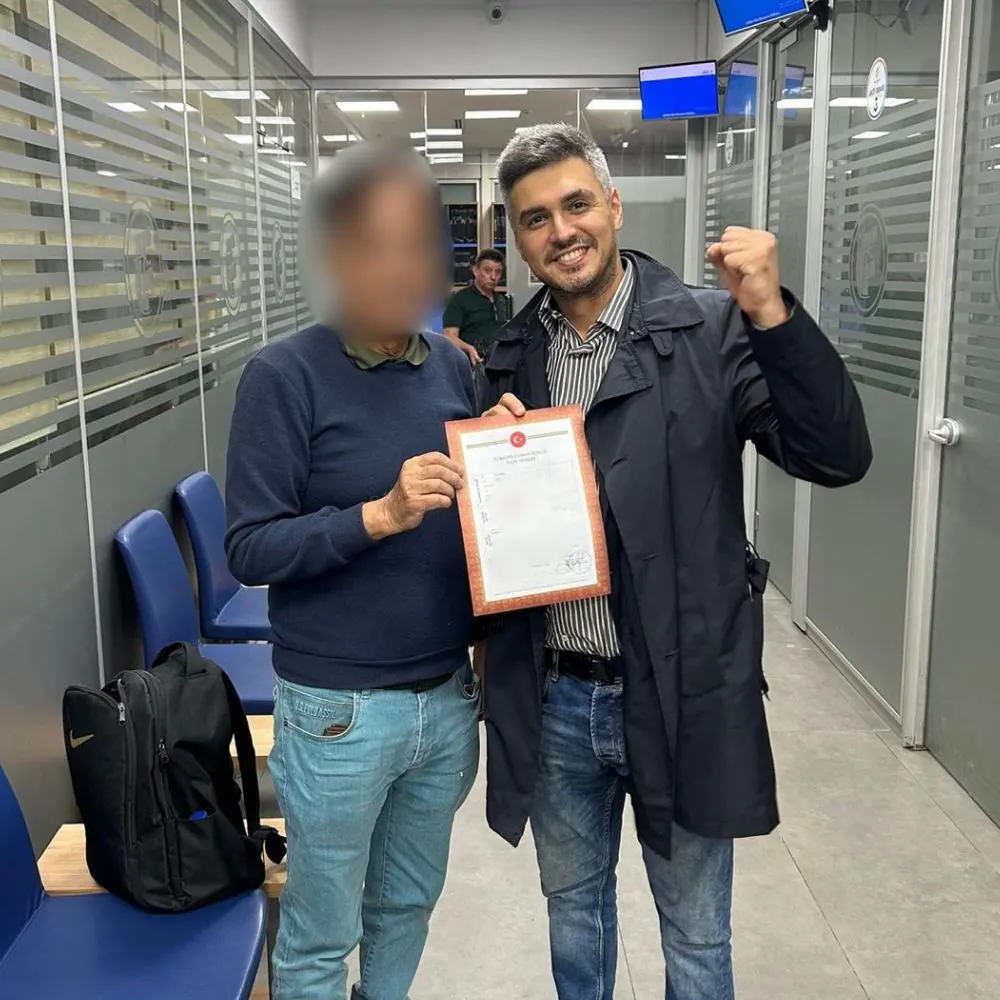
Şişli Land Registry Office: title deed transfer for a Turkish citizenship by investment application, after the property due diligence and the currency exchange certificate. 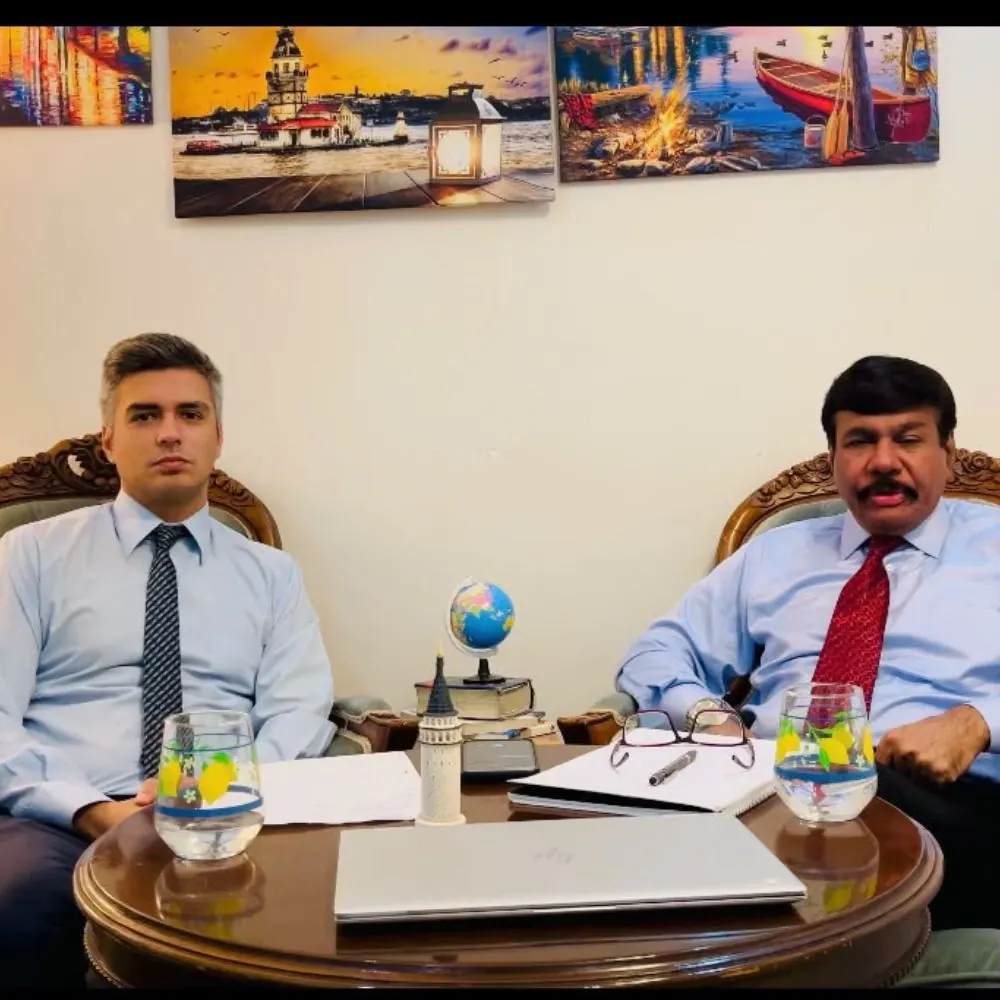
Joint webinar with a Pakistani lawyer on Turkish citizenship by investment for Pakistani citizens. 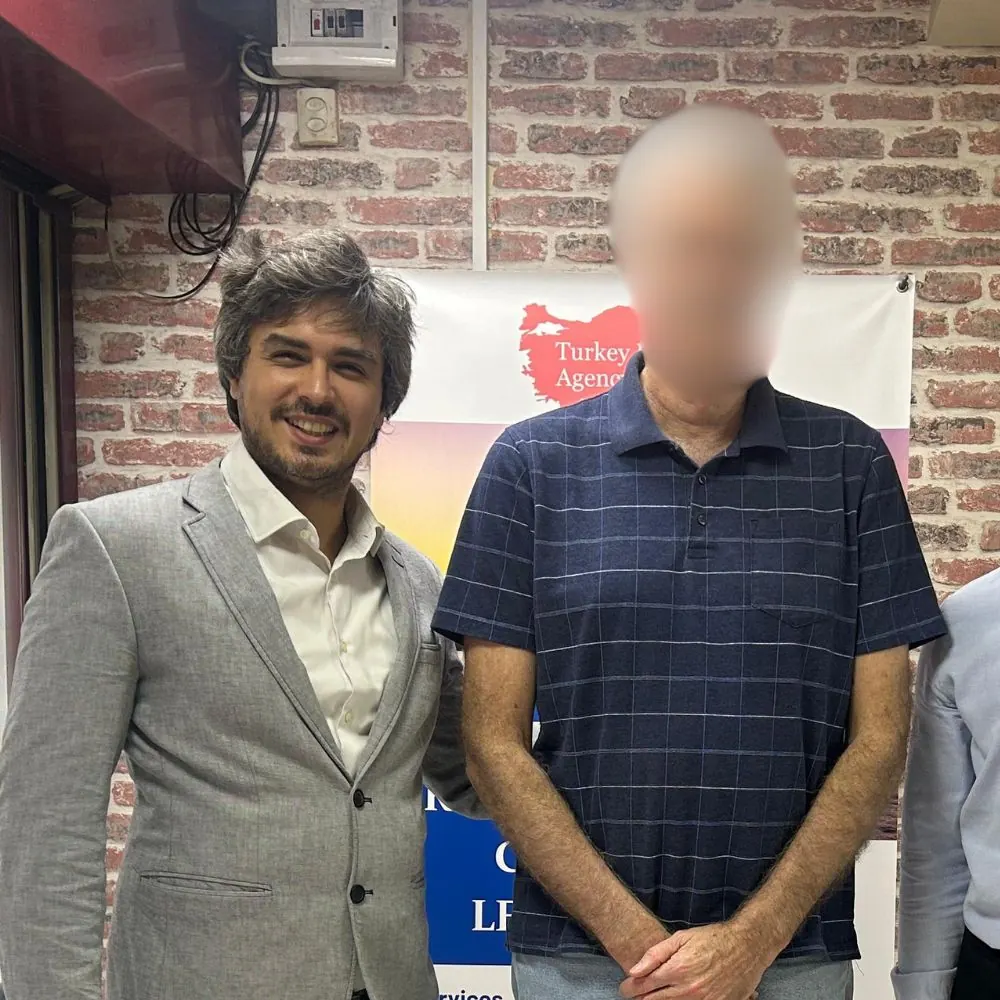
Citizenship by investment through the USD 500,000 bank deposit route: bank account opening, currency exchange documents and the investment conformity certificate. 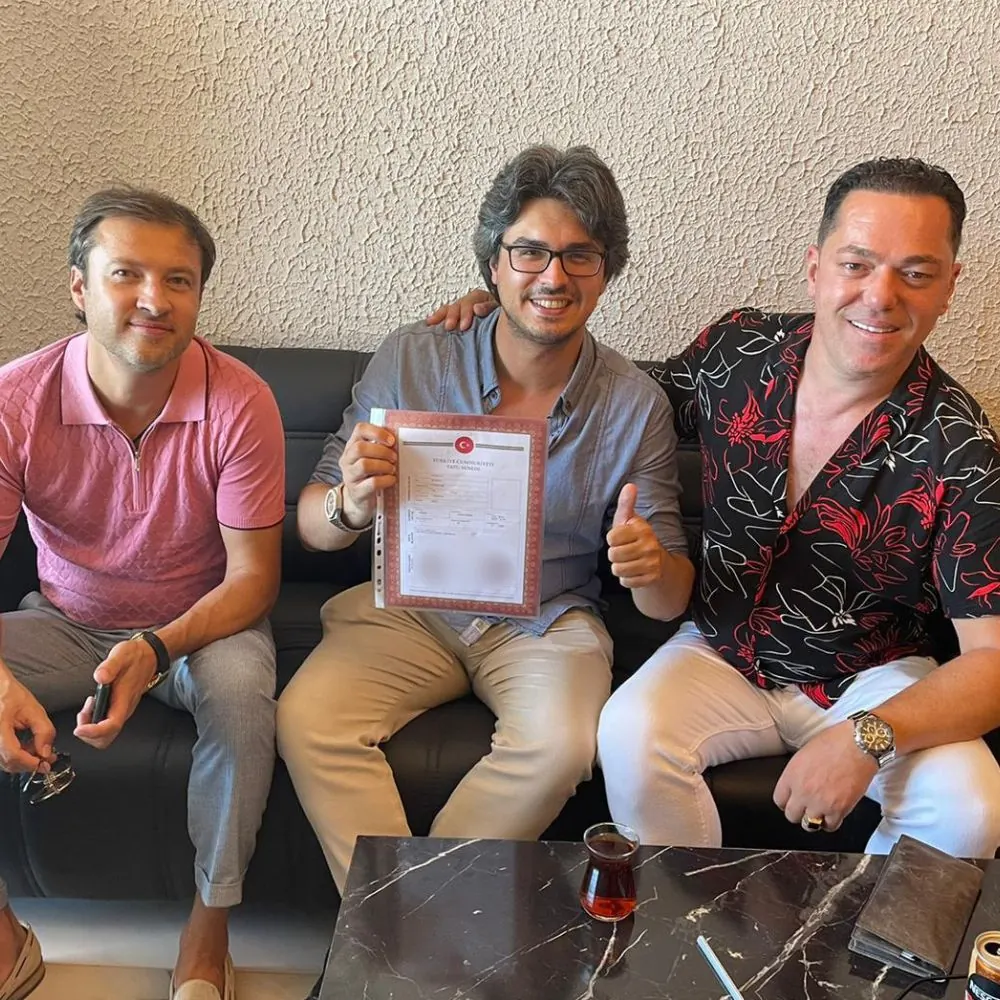
Antalya: title deed procedures for a property purchase made for a Turkish citizenship by investment application.
Other practice areas
- Turkish Citizenship by Property
- Turkish Citizenship by Bank Deposit
- Citizenship by Pension Fund (BES)
- Citizenship by Government Bonds
- Citizenship by Investment Fund Shares
- Citizenship by Capital or Employment
- Citizenship Due Diligence
- Real Estate Due Diligence
- Turkish Residence Permit Lawyer
- Work Permits and Company Formation
- Entry Ban and Deportation
- Foreign Divorce Recognition